Mercedes Steering Lock Repair: Symptoms, Causes and Solutions
September 10, 2026
If you own a Mercedes-Benz and have been researching ignition problems, you may have encountered two similar terms: EZS and EIS. One workshop might mention an EZS fault, while another recommends Mercedes EIS repair. This naturally raises an important question: are the EZS and EIS different components, or are they simply different names for the same thing?
The very simple answer is that EZS and EIS generally refer to the same Mercedes-Benz electronic ignition component.
EIS stands for Electronic Ignition Switch, the English-language term commonly used by technicians and vehicle owners. EZS comes from the German Elektronisches Zündschloss, referring to the electronic ignition lock/switch system.
Although the terminology differs, both names describe the critical electronic module responsible for recognising an authorised key and helping your Mercedes allow the engine to start.
Understanding what this component does—and recognising the symptoms when it starts to fail—can help you arrange professional diagnosis and repair before an intermittent problem becomes a complete no-start situation.
What Is a Mercedes EIS?
The Mercedes Electronic Ignition Switch (EIS) is an important part of the vehicle's electronic security and start-authorisation system.
Unlike the simple mechanical ignition switches found in older vehicles, a Mercedes EIS communicates electronically with the vehicle key and other security-related systems.
When you insert an authorised key, the EIS reads the security information associated with it. If the key is successfully recognised, the vehicle can proceed through the necessary security checks and authorise the engine to start.
Depending on the Mercedes model and generation, the EIS also communicates with other electronic modules involved in the starting and security process.
This is one reason why diagnosing an apparent ignition problem requires specialist knowledge. A Mercedes that refuses to start does not automatically have a faulty EIS.
The problem could potentially involve the key, battery, wiring, Electronic Steering Lock or another electronic component.
What Does EZS Mean on a Mercedes?
EZS is essentially the German terminology for the same component.
EZS stands for Elektronisches Zündschloss.
Mercedes-Benz is a German manufacturer, so it is common to encounter German terminology in technical documentation, diagnostic information and specialist discussions.
As a result, you may see:
- Mercedes EIS
- Mercedes EZS
- Electronic Ignition Switch
- Electronic Ignition Lock
- EIS/EZS module
These terms can appear in discussions of the same underlying component.
Therefore, if you search for "Mercedes EZS repair" and then encounter a specialist offering Mercedes EIS repair, you haven't necessarily found a different service.
Mercedes EZS vs EIS: What's the Actual Difference?
For practical repair purposes, there isn't a separate EZS versus EIS component to choose between.
The main difference is terminology.
EIS is the commonly used English abbreviation for Electronic Ignition Switch, while EZS is derived from the German name.
Think of it as two languages describing the same essential Mercedes ignition-security module.
This distinction is particularly useful when you're searching online for information, replacement components or repair services. Some technicians, diagnostic systems and parts suppliers may use EZS, while others use EIS.
Knowing that the terms are commonly interchangeable prevents confusion and makes it easier to find the right information about your vehicle.
What Does the Mercedes EIS/EZS Actually Do?
The EIS/EZS is much more sophisticated than a conventional ignition switch.
One of its most important jobs is key authentication.
When you attempt to start your Mercedes, the system must determine whether the key is authorised for that particular vehicle. The EIS communicates with the key and the vehicle's security systems before allowing the starting process to continue.
The module can also interact with the electronic steering-lock system and other control units involved in vehicle security and engine-start authorisation.
In simplified terms, the process works something like this:
- The Mercedes key is inserted or the starting system is activated.
- The EIS/EZS reads the key's electronic security information.
- The system checks whether the key is authorised.
- Relevant security systems are released or authorised.
- The vehicle permits the engine-start process to proceed.
If something interrupts this electronic communication, your Mercedes may refuse to start even though the engine itself has no mechanical starting fault.
Common Symptoms of a Failing Mercedes EIS/EZS
Electronic ignition problems can initially be intermittent, which can make them particularly frustrating.
Your Mercedes might start normally one day and then refuse to recognise the key the next. In other situations, you might need several attempts before the ignition responds.
Common symptoms that can indicate an EIS/EZS-related problem include:
- The key won't turn in the ignition
- The vehicle doesn't recognise the key
- Dashboard or instrument lights fail to illuminate
- The steering lock doesn't release
- The engine won't start
- Starting becomes intermittent
- The ignition occasionally works after several attempts
- The vehicle becomes completely unresponsive to the key
However, these symptoms aren't exclusive to EIS failure.
A faulty Mercedes key, low battery voltage, wiring issue or problem with the Electronic Steering Lock can produce similar behaviour. That's why professional diagnostics are important before replacing expensive electronic components.
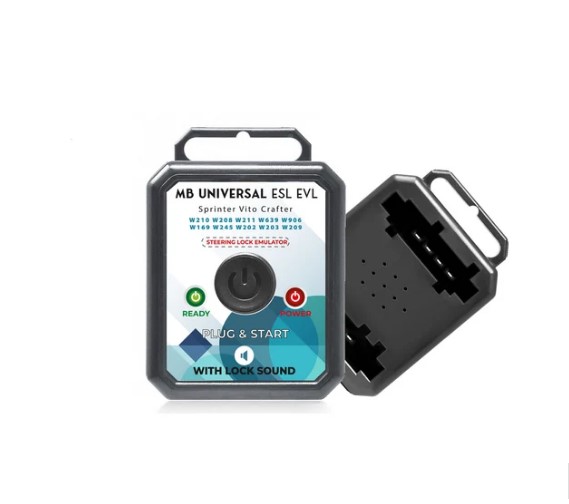
EIS vs ESL/ELV: Don't Confuse These Components
Another common source of confusion is the difference between EIS/EZS and ESL/ELV.
Unlike EIS and EZS, which are different names for essentially the same component, the Electronic Steering Lock is a separate system.
ESL means Electronic Steering Lock, while ELV comes from the corresponding German terminology.
The steering-lock system physically secures the steering column when required. It also communicates with the vehicle's electronic security system.
When you use an authorised key, the EIS/EZS and steering-lock system need to work correctly as part of the vehicle's start-authorisation process.
A fault with the steering lock can therefore create symptoms that resemble an EIS failure, including a steering wheel that remains locked and a vehicle that refuses to start.
A proper diagnostic assessment helps determine which component is actually causing the problem.
Can a Mercedes EIS Be Repaired?
In many cases, yes.
A faulty EIS doesn't automatically mean that an entirely new ignition module must be installed.
Depending on the fault and condition of the unit, professional Mercedes EIS repair may restore the original component to working order.
This can be advantageous because the EIS is part of the vehicle's security architecture and contains information associated with the car and its keys.
At MercKeys, the first approach is to accurately diagnose the problem and repair the existing EIS where possible. If components require replacement, genuine Mercedes-Benz parts are used where applicable.
When repair isn't practical, replacement or refurbishment may be required.
Why Can't You Simply Install Another EIS?
A Mercedes EIS isn't equivalent to an ordinary mechanical ignition switch that can simply be removed and replaced with another unit.
Because the EIS forms part of the vehicle's anti-theft and start-authorisation system, the replacement must be correctly matched and programmed to work with the vehicle.
Simply purchasing a second-hand EIS and installing it isn't necessarily enough to get the car running.
The module must communicate correctly with the key and associated security systems.
Specialist technicians can determine the appropriate repair or replacement strategy depending on the Mercedes model, EIS generation and nature of the failure.
Repair or Replace: Which Is Better?
There's no universal answer because it depends on what has failed inside the EIS.
Where the original unit can be reliably repaired, repair can often be a sensible and cost-effective option. It may also preserve the existing configuration associated with the vehicle.
However, an EIS that is extensively damaged or cannot be reliably repaired may need to be replaced.
The important point is to diagnose before replacing.
Starting with an accurate assessment reduces the risk of replacing an expensive component only to discover that the real problem was the key, steering lock, wiring or another electronic system.
Why Professional Mercedes EIS Repair Matters
Mercedes electronic security systems are highly specialised.
The EIS doesn't operate independently. It communicates with other systems and contains security-related information that needs to remain correctly matched with the vehicle.
Professional repair therefore requires more than basic mechanical skills.
A Mercedes electronic specialist can use appropriate diagnostic equipment to determine whether the EIS is communicating correctly, whether the key is being recognised and whether another component is preventing the vehicle from starting.
This specialist approach can save considerable time compared with replacing components based solely on symptoms.
Can You Send a Mercedes EIS Away for Repair?
In many situations, yes.
This can be particularly helpful for Mercedes owners who don't live near a specialist workshop.
MercKeys provides Mercedes electronic services for customers throughout New Zealand. If you're outside the local service area, you can send your faulty EIS and key to MercKeys for assessment. Where possible, the EIS can be repaired and recoded before being returned.
This gives Mercedes owners around New Zealand access to specialist electronic repair expertise without necessarily having to transport an immobilised vehicle over a long distance.
Should You Repair an Intermittent EIS Problem Now?
It's generally better to investigate an intermittent ignition problem before it becomes a complete failure.
A Mercedes that occasionally doesn't recognise its key may eventually reach the point where it doesn't respond at all.
Intermittent symptoms can also make diagnosis more complicated because the problem may disappear temporarily.
If you've noticed that your key sometimes won't turn, the dashboard occasionally remains dark or your vehicle unpredictably refuses to start, arranging professional diagnosis sooner rather than later could help prevent the inconvenience of becoming stranded.
Mercedes EIS Repair in New Zealand
If you're searching for reliable Mercedes EIS repair, the most important first step is confirming what's actually causing the problem.
EIS/EZS faults can produce symptoms similar to key, steering-lock and electrical faults, so replacing components without proper diagnosis can become expensive.
MercKeys specialises in Mercedes-Benz electronic systems, including EIS diagnosis, repair and replacement. The team uses specialist diagnostic equipment to identify faults and aims to repair existing units where practical.
MercKeys can also assist customers throughout New Zealand, including owners who need to send their EIS and key away for specialist attention.
Mercedes EZS vs EIS: The Bottom Line
Despite the different terminology, Mercedes EZS and EIS generally refer to the same electronic ignition component.
EIS is the English term—Electronic Ignition Switch—while EZS comes from the German terminology used for the electronic ignition lock/switch.
Whichever name you encounter, the component performs a vital role in authenticating your Mercedes key and allowing the vehicle's security and starting systems to operate correctly.
If your key isn't being recognised, the ignition won't respond, the steering lock won't release or your Mercedes has developed an intermittent no-start problem, don't automatically assume you need a new ignition switch.
Professional diagnosis can determine whether the problem is the EIS/EZS, key, steering lock or another electronic component.
For specialist Mercedes EIS repair in New Zealand, contact MercKeys to have the fault properly diagnosed and discuss whether your existing EIS can be repaired or requires replacement.